Peel Park Quarter opens to students
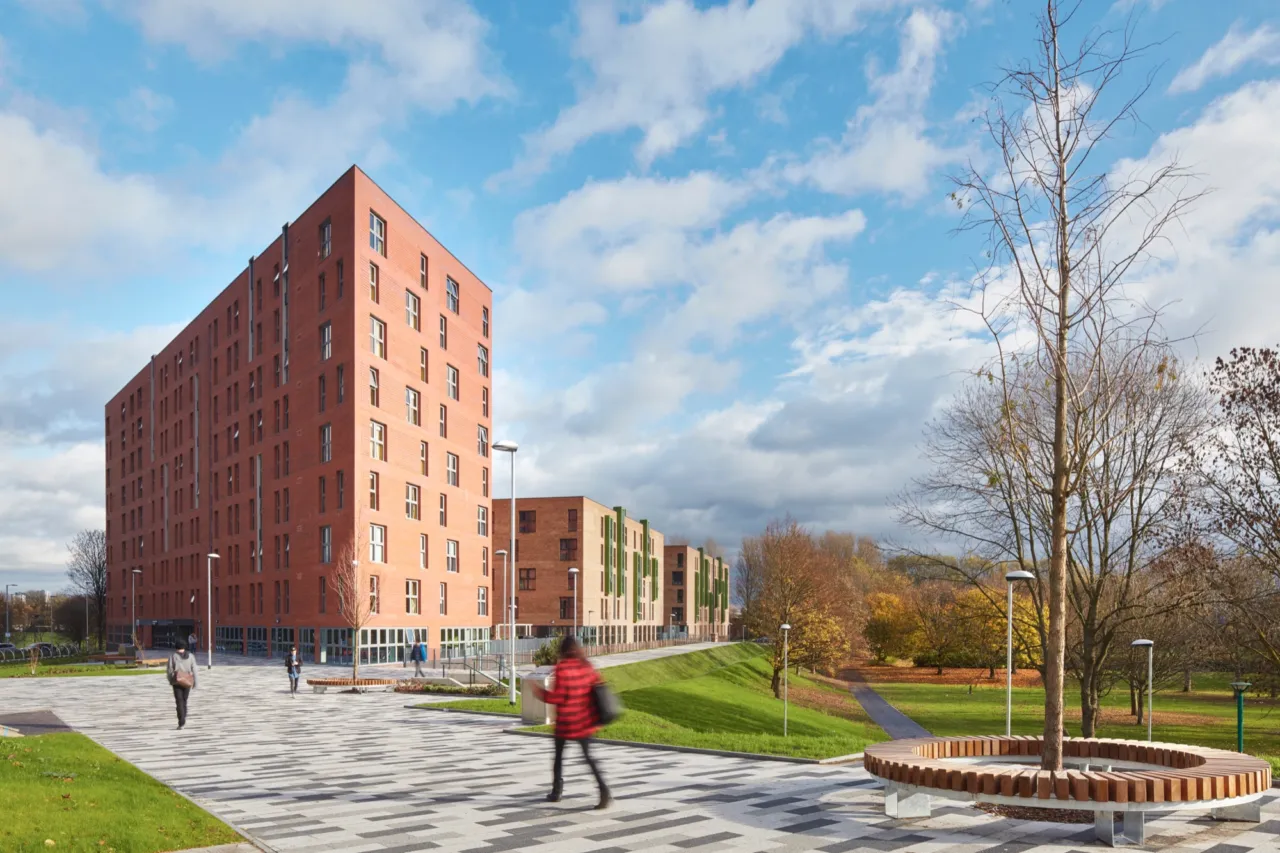
The first phase of Peel Park Quarter, a new large-scale student residential development on the University of Salford's Peel Park Campus in Manchester, has opened its doors to students. The development - designed to be built over two phases - will eventually incorporate 2,050 student residential units located adjacent to Peel Park. The first phase of the development provides 1,367 units of student accommodation within a seven-block campus.
Working alongside Sheppard Robson, on behalf of a consortium led by Graham Investments, Gillespies has designed a new public realm setting for the Peel Park Campus.
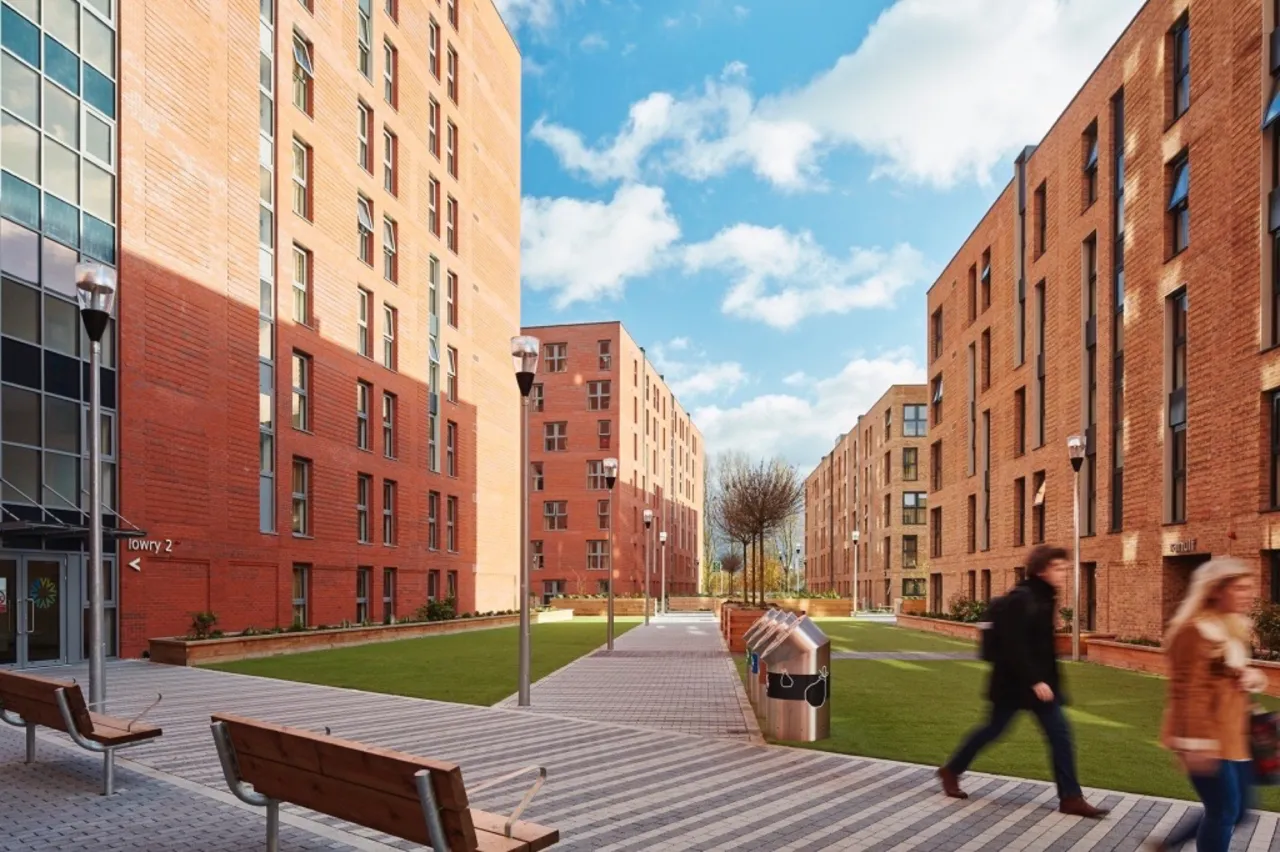
The new public realm has been designed to create strong destinations within campus, that connect to surrounding areas, identifying and strengthening campus anchors and creating public places with a diverse variety of uses. The surrounding landscape provides a balance of soft and hard surfacing, responding to the arrangement of the built form and how the open spaces between the residential blocks are accessed. Our desire to create a soft green 'parkland' setting for the new buildings has been driven by the urge to connect with the adjacent Peel Park and River Irwell.
A series of external courtyards within the residential blocks offer attractive, inviting and sheltered spaces that extend the internal functions of the buildings into the public realm, providing a variety of 'outdoor rooms' that offer different functions and reflect intensities of uses around the Peel Campus. Large outdoor lecture theatres and performance spaces have been created at the heart of the campus in Chapman Square, whereas the more peripheral parts of the campus have been utilised to provide students spaces for studying and quiet areas for reflection.
Intuitive movement throughout the campus has been at the heart of the public realm design centred around the 'Broad Walk'. A series of new routes link all the key destinations and provide a comfortable, interesting and enticing journey across the campus, facilitating student interaction and creating opportunities for chance encounters.
The landscape scheme injects colour and interest into the space while being robust enough to withstand the heavy pedestrian flows. The choice of landscape treatments and furniture deliver a cohesive across-campus identity that promotes ease of wayfinding. External lighting further enhances the vibrancy of the area at night and creates a secure environment.
Related projects


