Rochdale Town Hall, with multiple pedestrians in the public square.
Portfolios & Sketchbooks

Gillespies presents: Public Squares

Public squares are defined not only by their physical form, but by what they allow to happen. 


At their best, public squares accommodate the ordinary routines of urban life alongside moments of collective significance. They provide somewhere to meet, rest, eat, trade, perform, celebrate or simply watch the city move. Their value lies in this capacity to support different people, activities and rhythms without prescribing exactly how the space should be used.


A successful square must feel generous enough to host civic events while remaining comfortable and purposeful on a quiet weekday morning. It must support movement without becoming only a route, and encourage people to stay without obstructing the life around them.Public squares are therefore more than open space between buildings. They are civic infrastructure, contributing to public life, local identity and the everyday experience of a place.

P12006 00 N25 medium
P12006 00 N21 medium

Northampton Market Square supports the everyday life of the town, from market trading to children playing in the water. Its open, flexible layout also allows the square to become a stage for performances and larger civic occasions.

Places to pause

One of the simplest measures of a public square is whether people choose to stop.


Many people enter a square because it lies on the way to somewhere else, so the challenge is to create reasons to pause. This might begin with seating, but comfort is shaped by a wider set of conditions: shelter from wind, access to sun or shade, views, planting, and a sense of connection to the surrounding.


Positioning is important; some people want to be at the centre of public life, while others prefer the security of an edge. Providing a choice allowing people to use the space in ways that feel natural to them.

M4291 N67 medium
St Helen's Square, Leadenhall St, City of London

At Bradford City Park and St Helen’s Square, seating is positioned to connect people with water, planting and the activity around them. These comfortable edges create places to pause, observe and gather throughout the day.

Runner in the background in Aldgate Public Realm

Planting is essential too. Trees can provide shade and a dynamic seasonal backdrop, while low-level planting can border quieter areas, soften hard surfaces and create a sense of shelter. These elements work best when they are considered as part of the square’s underlying structure rather than added as decoration.


A seat overlooking a fountain, market, performance area or well-used route offers more than physical rest. This is particularly important in creating inclusive public spaces as not everyone experiences or occupies a square in the same way. Age, mobility, sensory needs and personal confidence all influence whether a place feels welcoming. Frequent resting points, accessible routes and different types of seating can make a significant difference, while clear sight-lines and intuitive movement help people understand how the space works.


These small moments of pause give public space its everyday character. They allow a square to become somewhere people recognise and return to, rather than an empty surface encountered only in passing.

Squares as stages
A public square must also be capable of change.


The same space that is used daily for lunch breaks, play and movement, may at other times host markets, performances, demonstrations or ceremonies. The strongest squares accommodate this transition without feeling incomplete when no organised activity is taking place.


This requires a balance between openness and definition. Large, unobstructed areas can support crowds and temporary infrastructure, but too much undifferentiated space can feel exposed or empty. Planting, seating and active edges can give the square a comfortable everyday scale, while a clear central area provides flexibility for larger gatherings.

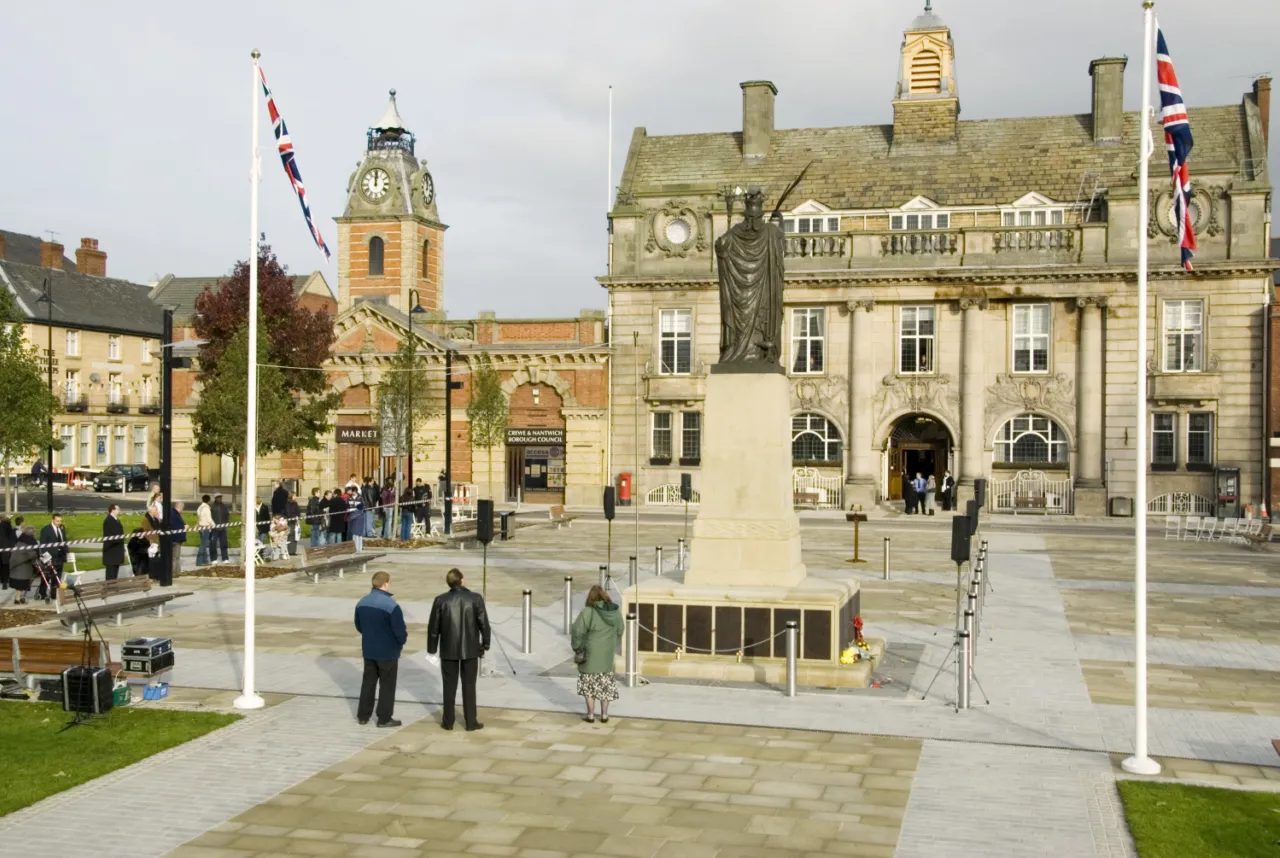
Municipal Square in Crewe
Municipal Square provides a place for everyday reflection around Crewe’s war memorial. The same setting also accommodates remembrance events, allowing individual moments and collective acts of commemoration to coexist.

The surrounding buildings and streets also form part of the stage. Shopfronts and cafes can bring activity to the edges, helping the square remain occupied. Routes around the space need to remain clear, particularly when temporary events are introduced. A successful event should animate the square without disconnecting it from the wider movement of the city.


Behind the bustling activity, infrastructure plays a quiet but important role. Power, lighting and drainage all influence how easily a square can accommodate different uses. When these requirements are integrated from the outset, events can take place with less disruption and fewer temporary interventions. The landscape retains its clarity while supporting a broader programme of public life.

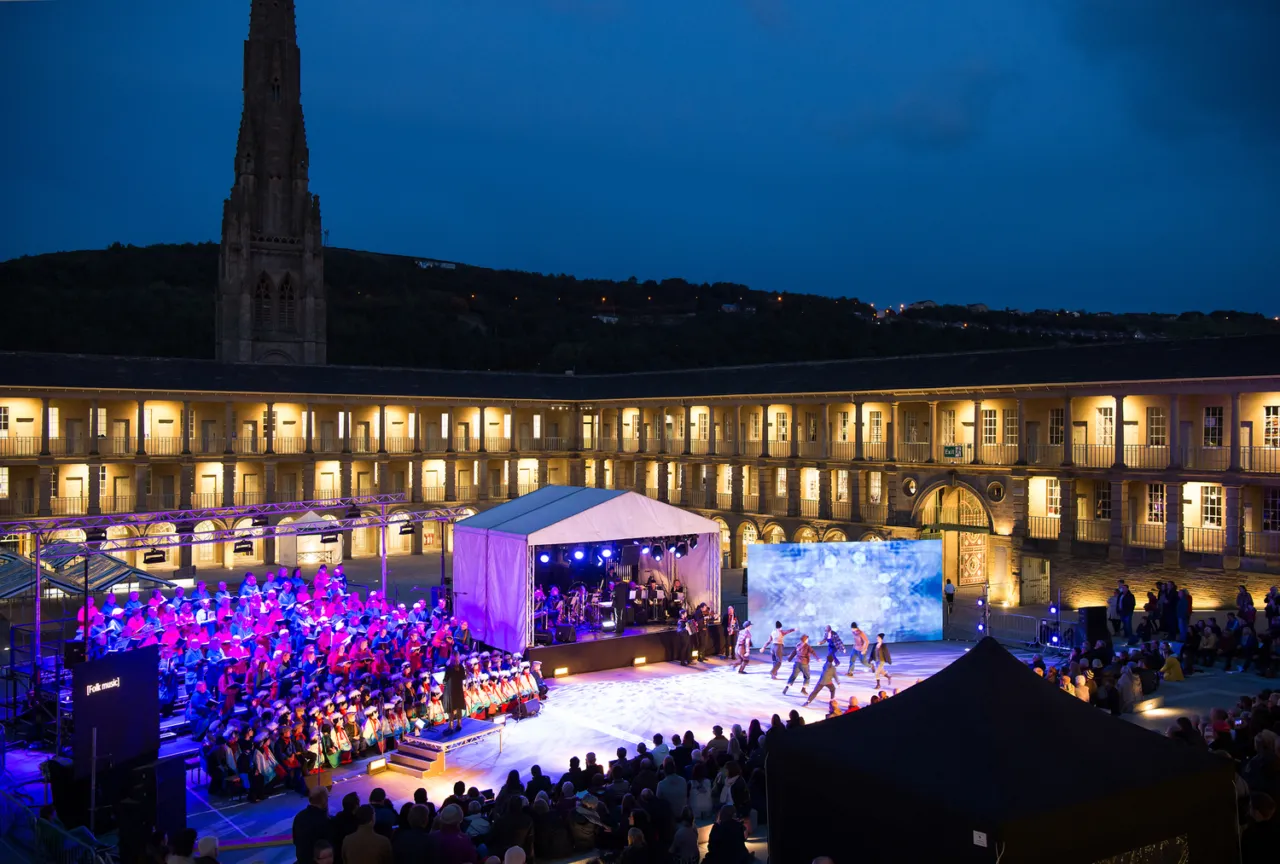
Piece Hall at night with a stage performance
The Piece Hall provides a dramatic yet practical setting for performances after dark. Integrated lighting and flexible event infrastructure allow its historic courtyard to accommodate a stage and large audiences.

After dark, lighting can extend the role of the square and reveal a different character. The aim is not simply to make the space brighter. Carefully considered illumination can clarify routes, highlight entrances and support gathering while preserving areas of contrast and atmosphere.

Importantly, the idea of the square as a stage does not mean that every moment must be programmed. Much of public life is informal and unpredictable. A group gathers around a street performer. Children turn a landscape edge into a place to play.The role of landscape is to make room for these possibilities.

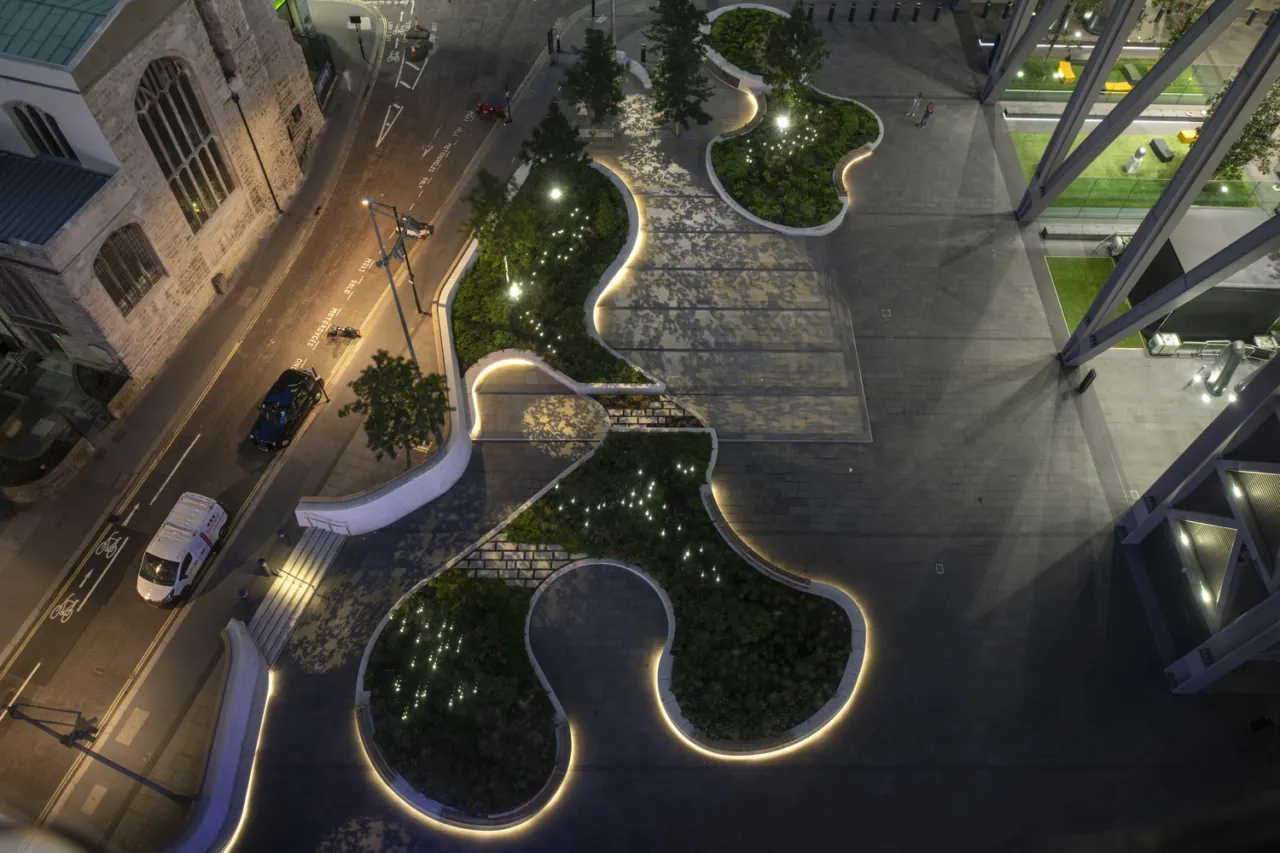
St Helen's Square illuminated at night.
At St Helen’s Square, lighting is integrated gently along the edges of the planters. This defines the route through the square while preserving a calm and welcoming evening atmosphere.

Designing for everyday life and civic moments

The success of public squares cannot be judged only through the quality of materials or the clarity of a plan. It becomes visible over time, through the ways people occupy the space, adapt it and make it part of their routines. Long-term management is therefore as important as the initial design. Planting must be able to mature, materials must weather well and event programmes must remain compatible with daily use.


The best public squares do not attempt to determine every activity. They offer comfort without clutter, identity without overstatement and flexibility without becoming anonymous. A place to pause on an ordinary afternoon can also become the setting for a city-wide celebration.


Designing successfully for both is what gives a public square its lasting civic value.

Aldgate Square, The City of London
P11511 00 001 N148 medium

At Aldgate Public Realm, lunchtime activity shows how the lawn and seating have become part of people’s daily routines. At Rochdale Town Hall, the completed landscape complements the restoration of an important civic setting, creating a renewed public space around the historic building.