Mayfield Park
Portfolios & Sketchbooks

Gillespies presents: Urban greening

Urban planting is most valuable when it is treated as infrastructure rather than decoration. 

In dense towns and cities, trees and planting influence how streets, squares and developments look, feel and function. They can provide shade, support biodiversity, soften hard surfaces and create more comfortable places to walk, meet and spend time together.

Achieving these benefits requires more than just adding greenery after the made design decisions have been made. Planting needs sufficient space, suitable soil and access to water, as well as a clear understanding of how it will establish and mature. When considered from the outset, it can become part of the structure of a place, shaping the routes throughout it and defining how people connect with the space.

Diagram for Wakefield's urban greening strategy

In focus - Wakefield urban greening strategy

This urban greening strategy within Wakefield is a perfect example of the considerations that can be made when planning to introduce more planting within an urban setting. Here, the diagram points out key factors including how to 'green the grey', provide sustainable drainage, support people and activity, and benefit local wildlife.

Trees in the city

Trees are a major component to consider. Their canopies can bring shade to exposed streets and squares; creating both shelter and places to sit, and in doing so can help make large-scale developments feel more human. 

Existing mature trees are particularly valuable because their scale and character cannot be recreated quickly. Retaining them can provide an immediate sense of permanence, but it also requires the surrounding landscape to respond carefully to established roots and growing conditions. On the other hand, when new trees are introduces, their success depends on decisions that may not be visible once a project is complete. Species selection must be determined by the available space, exposure and the climate (both present and anticipated). Below ground, adequate soil and suitable drainage are needed to support healthy growth without creating conflicts with other species or the surrounding surfaces.

Elepehant Park Heygate Public Realm
P10276 00 004 N174 webview

There is a huge variety of trees throughout Elephant Park, London, and the surrounding landscape and planting responds to them differently. The younger trees within the Heygate public realm are surrounded by more dense planting, while the established trees within the park border large areas of grass providing shade and structure.
The positions of trees also determines how they contribute to public life. A canopy over seating can create a comfortable place to pause, while a line of trees can define a route or establish continuity along a street. In a square, groups of trees can provide a more sheltered setting at the edges without limiting the flexibility of the central space. Planting beneath trees can extend their contribution at ground level. Shrubs, perennials, and groudcover help soften the transition between trunks and hard paving, while creating further opportunities for micro habitats and seasonal change. These areas must still consider access and maintenance especially when beside a busy pedestrian route.

Trees are long-term elements of the city, so stewardship is fundamental. Their value increases as they mature, but only if there is a clear approach to establishment, watering, maintenance, and eventual replacement. Designing with trees means considering not only how they appear at completion, but how they will grow and shape the experience of a place over many years.

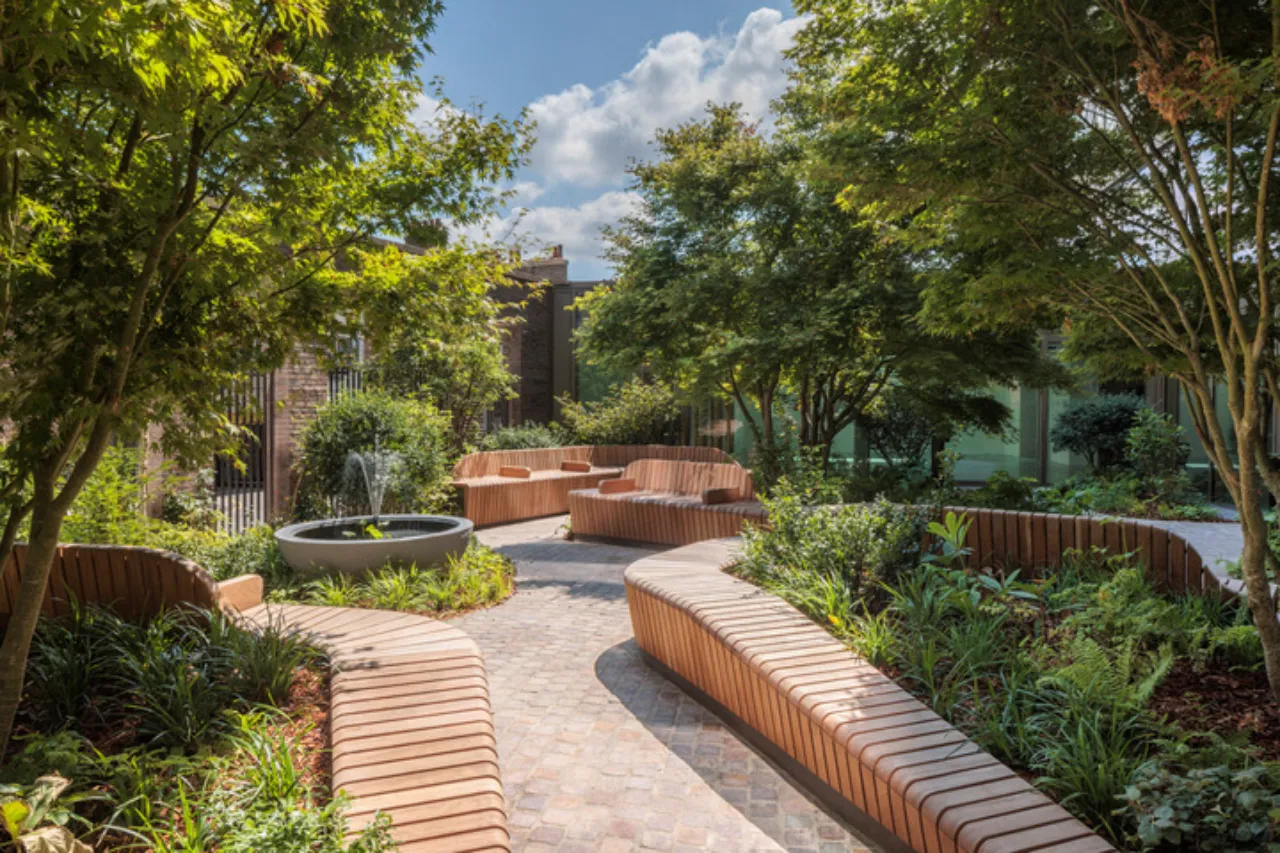
Seating area within 11 Belgrave Road
Within 11 Belgrave Road, the canopy of trees behind the seating provides additional shade and evokes a feeling of safety and tranquility. The added character of trees makes the site more inviting and comfortable to rest in.

Layered urban planting

Urban planting does not need to rely on trees alone. Combining canopies with shrubs, perennials, and grasses creates landscapes with great depth and variety. Each layer can perform a different role: shrubs can define edges or create enclosures while lower planting brings texture and seasonal details for example. Used together multiple layers can frame routes, mark thresholds and create a gradual transition between buildings and public space.

Layered planting can also support a wider range of wildlife by providing different forms of shelter and resources, which requires thoughtful species selection and an understanding of how the planting will develop - not just simply providing the greatest number of varieties. Seasonality is central to this approach. Flower, foliage, seed heads and changing colours can give a landscape a different character through the year. Plants should be composed so that the overall structure remains clear as individual species emerge, recede or become dormant.

This requires a balance between richness and legibility. Planting can feel generous without overwhelming the spaces around it. Heights and densities need to maintain important views, keep entrances visible and allow people to move comfortably. In residential or workplace landscapes, the careful use of planting can create quieter areas while preserving a sense of connection and safety.

Successful planting must also reflect the realities of its setting. Urban landscapes may face wind, heat, compacted ground and intensive use. Plant choices should respond to these conditions and to the level of maintenance that can be sustained over time. A well-designed scheme anticipates change. Some plants will establish quickly while others may take years to reach their intended scale. Maintenance should guide this development rather than attempt to hold the landscape in the condition seen on its opening day.

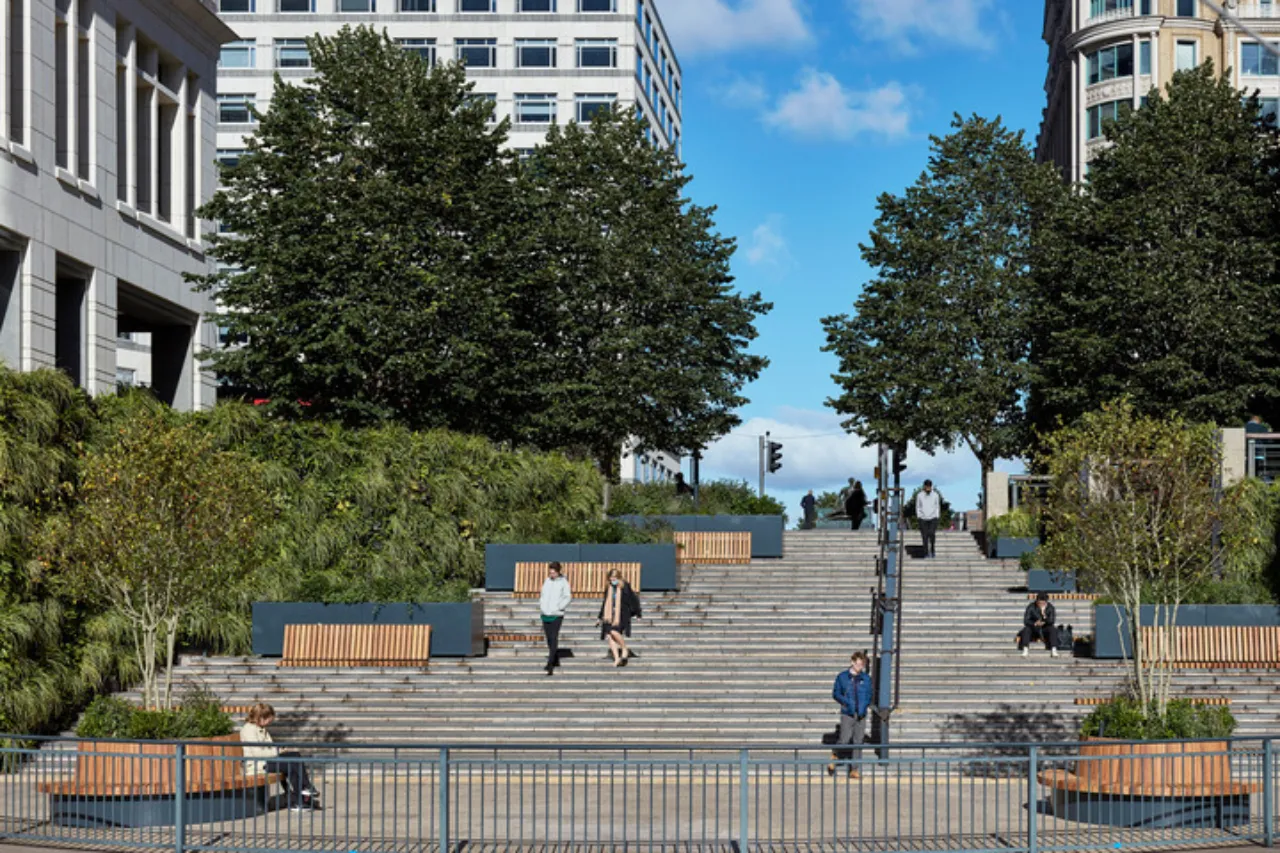
Greenery surrounding key through routes in Canary Wharf
At Canary Wharf, trees and green walls frame the routes through a busy pedestrian and commuter zone. In doing so they define the threshold, clearly marking areas for rest and those that are left open for the heavy footfall.
P11941 00 N287 webview
P21000 00 N11 webview
OX4286 N273 webview

Layered planting can come in many forms. These three examples include Belfast's City Quay Gardens, a design for Winchester's Bushfield Camp and Salford's MediaCityUK. All these sites successfully use different combinations of trees, shrubs, perennials, and grasses within dense urban settings.

Greener urban infrastructure

The contribution of urban greening becomes clearest when it performs several roles at once. The same greenery that is supporting habitats and contributing positively to the environment can also provide shade, define routes and create a more comfortable setting for public life. Its success should not be measured in appearance, but on whether plants can establish and over time remain useful to the intended purpose of the setting. 

By treating planting as essential infrastructure, rather than finishing touches, urban greening can become a lasting part of how a place works. Trees and layered planting do more than soften the city; they help shape urban environments that are more comfortable, adaptable and connected to nature.

P20567 00 N120 webview
P20567 00 N125 webview

Mayfield Park represents a hugely successful completed urban landscape where planting supports both people and nature and where the landscape is central to the identity of the place.