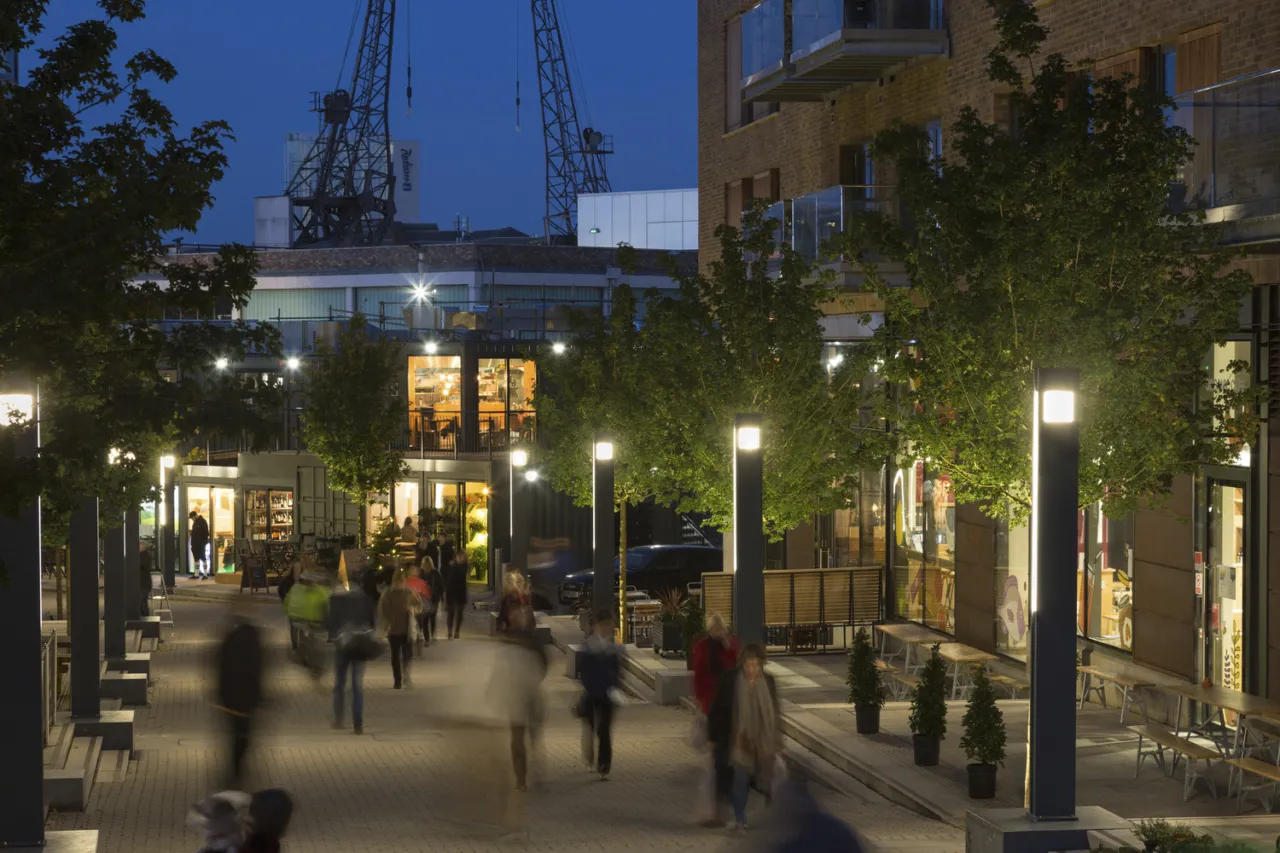
The primary purpose for streets are to act as route from a-to-b, but they are also some of our most frequently used public spaces.


Stockport Bus Interchange sits within a dense and complex urban setting, where carefully planned routes help people move clearly through the site. Changes in level create distinct spaces for movement and activity, alongside places to pause, rest and observe the city around them.
Pedestrian priority

Pedestrian priority - in focus
King’s Boulevard forms a busy pedestrian route from one of London’s major railway stations, requiring generous and direct space for large numbers of people on a daily basis. This design maintains the continuous flow while integrating trees and seating, creating opportunities for shade and rest without obstructing movement.


At Darlington Pedestrian Heart and Walworth Square in Elephant Park, seating and planting are positioned alongside well-used pedestrian routes. These green spaces offer moments of comfort and respite, allowing people to pause while remaining connected to the activity of the surrounding streets.
Materials that define a street


At Stockport Bus Interchange, subtle changes in material, colour and texture distinguish routes for walking and cycling from areas intended for rest. The restrained palette makes these different functions easy to understand while responding carefully to the surrounding architecture. Meanwhile the water feature in Darlington Pedestrian Heart brings a playful combination of materials together.
Streets as public spaces