Gillespies appointed to deliver two significant masterplans for Medway Council
Gillespies have been appointed by Medway Council to deliver a strategic masterplan for Chatham Town Centre and a development framework for Hoo St Werburgh and adjacent settlements, two separate sites identified for regeneration as part of the Council’s Local Plan.
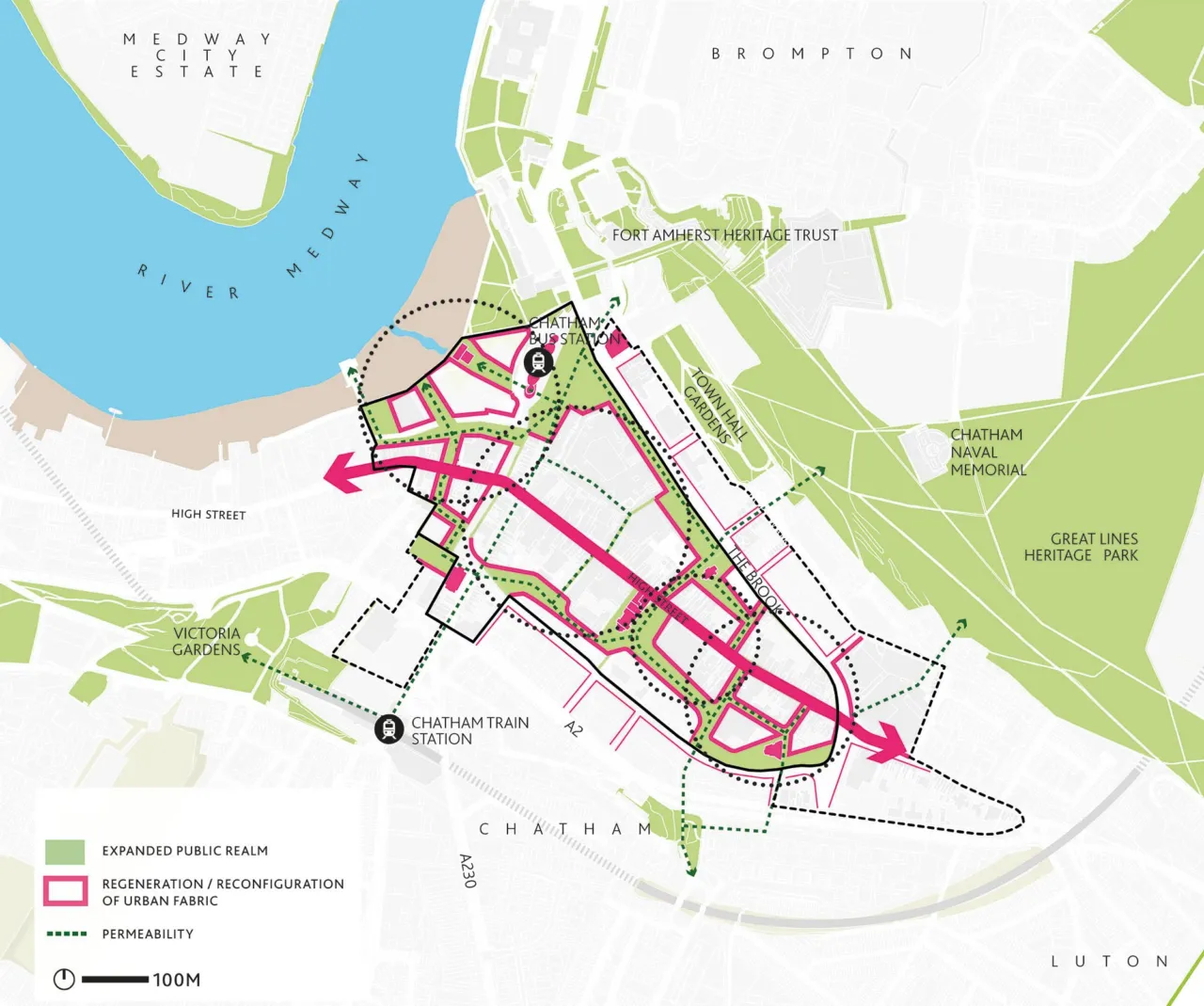
The main purpose of the Chatham Masterplan and Delivery Strategy is to ensure a holistic and integrated approach to Chatham Town Centre’s development that improves the attractiveness, distinctiveness and connectivity of the streets and public spaces of the Town Centre along with future areas of development. Chatham Town Centre is currently facing a number of key challenges, such as a lack of vibrancy and activity within the Town Centre; poor connections between the Town Centre and the adjacent neighbourhoods, including the Dockside area; a poor quality waterfront and a large amount of empty sites degrading the overall perception of the Town Centre.
As with many other town centres around the UK, Chatham High Street needs to ensure a successful transition from a retail-focused economy to a more diversified and attractive mix of activities.
After a comprehensive analysis of Chatham Town centre, the waterfront area and other key sites around the town centre, the team undertook a stakeholder workshop that helped to identify the main constraints of the overall area and aspirations for the future of the Town Centre. The next stage of the study will be to build on the findings from the workshop and further economic analysis, to define strategic principles and a bold vision for Medway main centre.
Following this initial appointment, the Council subsequently selected Gillespies to prepare The Hoo Development Framework, a strategic masterplan that will see the expansion of Hoo St Werburgh village into a new sustainable rural town, delivering much-needed new homes, essential infrastructure, community facilities and open spaces.
The development of Hoo St Werburgh was assessed by Medway Council as a potential location to complement the urban regeneration of the Town Centres. The rural town could provide a wide range of new housing, strengthening the economic and social offer and enhancing the overall sustainability of the peninsula through investments in the wider environment.
After an assessment of the existing natural, urban and economic context, the team will define key principles of development set out in a vision and objectives for growth. New neighbourhoods will be defined as well as appropriate locations for employment, retail, leisure and community use; a Transport strategy that promotes sustainable travel, connectivity and permeability, and a network of green infrastructure will be established. A sensitive approach to the understanding and recognition of the historic environment in considering the form of new development is required to ensure a sustainable and landscape-led approach to the overall growth of Hoo St Werburgh.