
A visit to Mayfield Park gave more than 100 geography students an opportunity to see how landscape architecture shapes places, and to consider where a career in the profession could lead.
To help us give you the best experience possible, please accept all cookies. Further details on how we use cookies is available on our Cookies page.
© Gillespies 2026
A visit to Mayfield Park gave more than 100 geography students an opportunity to see how landscape architecture shapes places, and to consider where a career in the profession could lead.
The decisions behind a public park are not always immediately visible. Routes, planting, water, access, ecology and spaces for gathering come together to create an everyday experience, but each reflects a careful understanding of how a place needs to work.
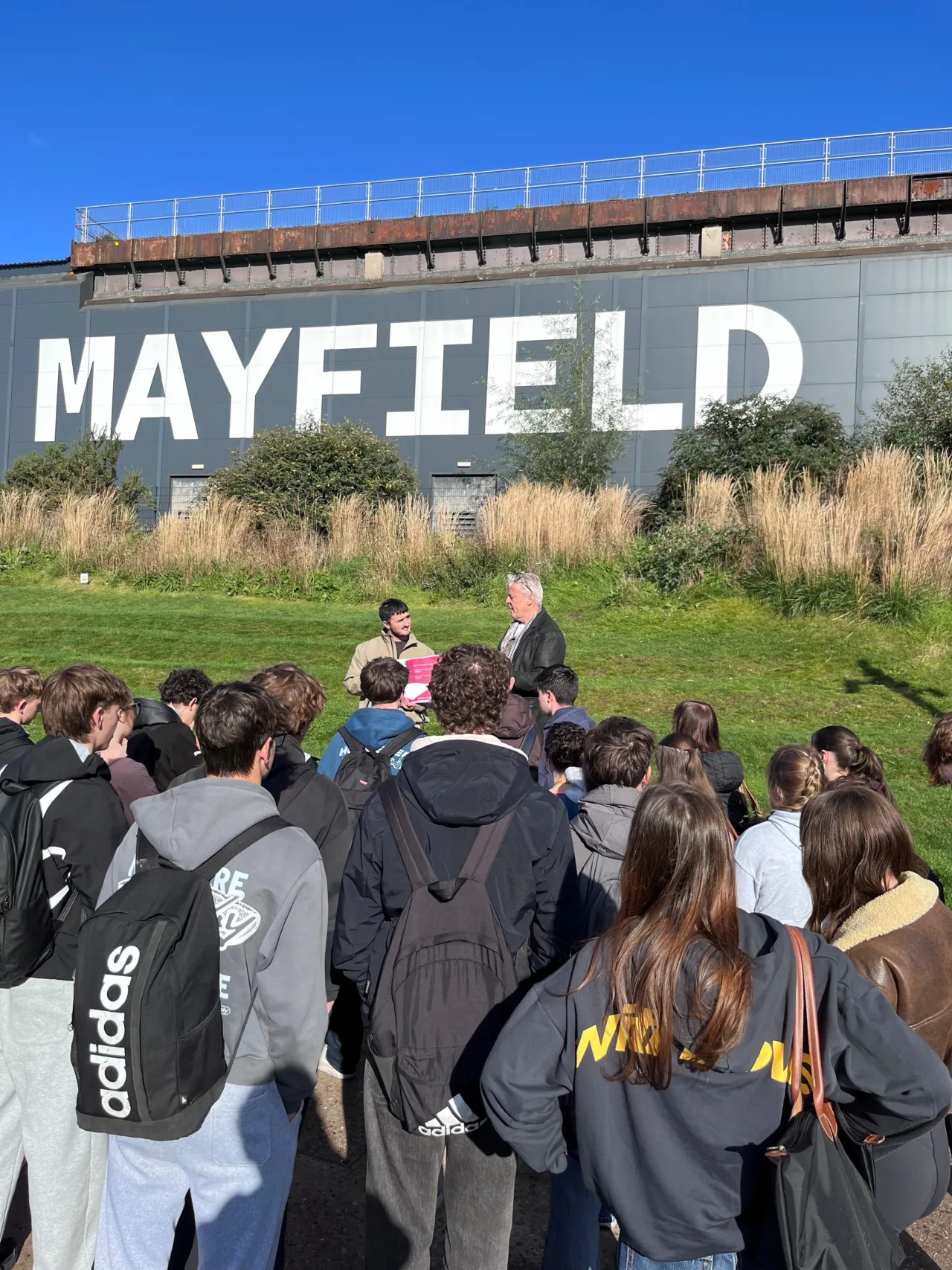
For Year 12 geography students from Greenhead College in Huddersfield, a field trip to Mayfield Park offered the chance to examine some of those decisions in context. The visit formed part of their study of ‘Making Spaces, Making Places’, connecting a curriculum topic with the development of a major new piece of Manchester’s public realm.
Organised through the Landscape Institute’s education outreach programme, the day brought more than 100 students to the park for a combination of fieldwork and short talks. Jim Gibson and Alfie Hiscock from Gillespies’ Manchester studio led three walk-and-talk sessions, introducing the history of Mayfield and explaining how the former industrial site became Manchester city centre’s first new park in more than a century.
Now open for more than four years, Mayfield Park offered students a clear example of how places change over time and how decisions made through the design process shape their future. Jim and Alfie discussed Gillespies’ role in delivering the park, the collaboration involved and the contribution of different built environment disciplines.
The sessions also made the role of the landscape architect more tangible. Students heard how landscape architects respond to a site’s history and environmental conditions, work with other specialists and make decisions that influence public life, movement, nature and long-term use.
This kind of direct engagement matters because landscape architecture is still unfamiliar to many young people. Students may already be interested in geography, design, ecology or the changing climate without knowing that these subjects can lead to a career focused on shaping the places around them.
The visit built on the Landscape Institute’s ongoing relationship with Greenhead College. By connecting landscape architecture with subjects already being taught, the programme helps teachers bring professional practice into the curriculum and introduce the profession as a credible career pathway.
Feedback from the college reflected the success of the day, with the talks helping students understand both the changes at Mayfield and the work of landscape architects. Meeting practitioners in a place they have helped to shape gave the students a direct connection between their fieldwork, the decisions behind the park and the career opportunities available within the profession.
For some, the visit may have been their first introduction to landscape architecture. We hope it will not be their last.
Our website uses cookies to distinguish you from other users of our website. This helps us to provide you with a good experience when you browse our website and also allows us to improve our site.
A cookie is a small file of letters and numbers that we store on your browser or the hard drive of your computer if you agree. Cookies contain information that is transferred to your computer's hard drive.
These are cookies that are required for the operation of our website. They include, for example, cookies that enable you to log into secure areas of our website, use a shopping cart or make use of e-billing services.
These allow us to recognise and count the number of visitors and to see how visitors move around our website when they are using it. This helps us to improve the way our website works, for example, by ensuring that users are finding what they are looking for easily.
These cookies record your visit to our website, the pages you have visited and the links you have followed. We will use this information to make our website and the advertising displayed on it more relevant to your interests. [We may also share this information with third parties for this purpose.]