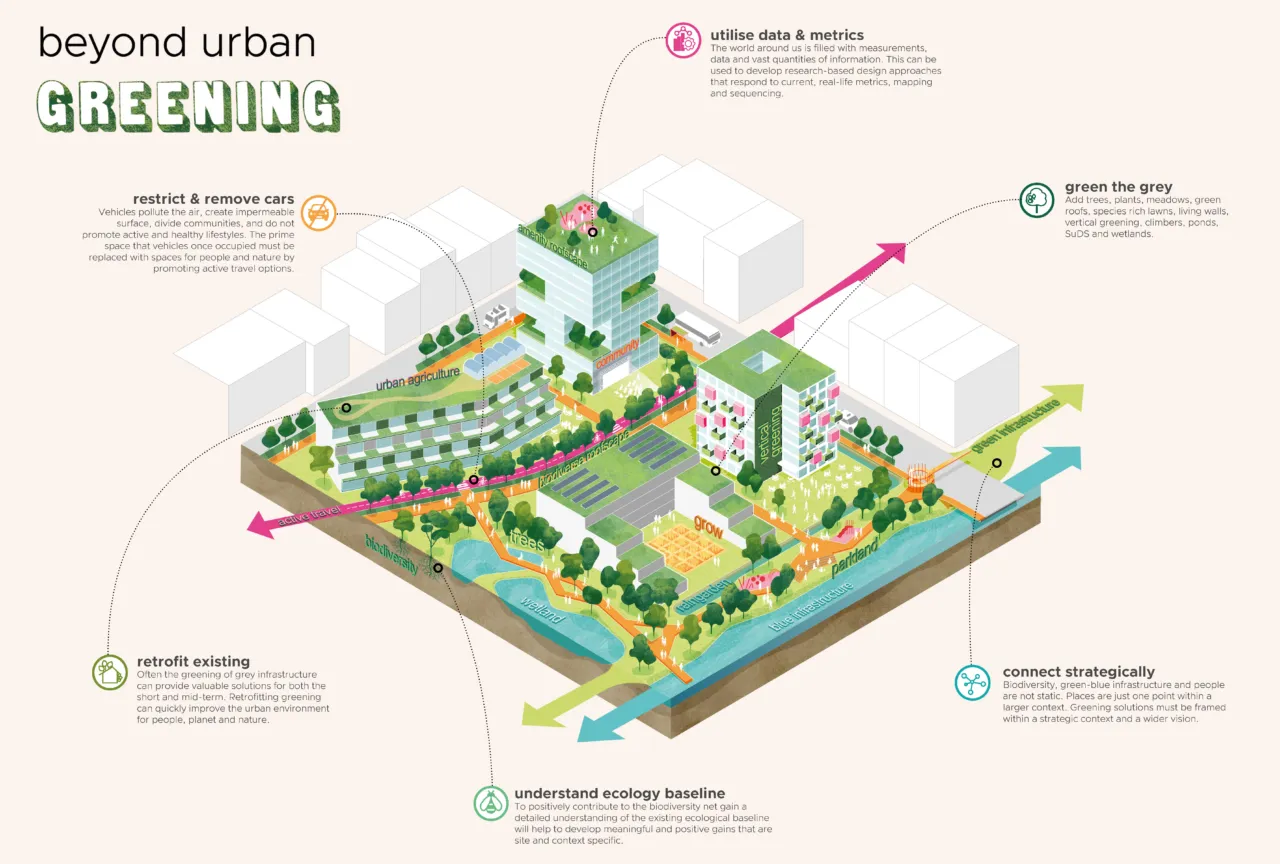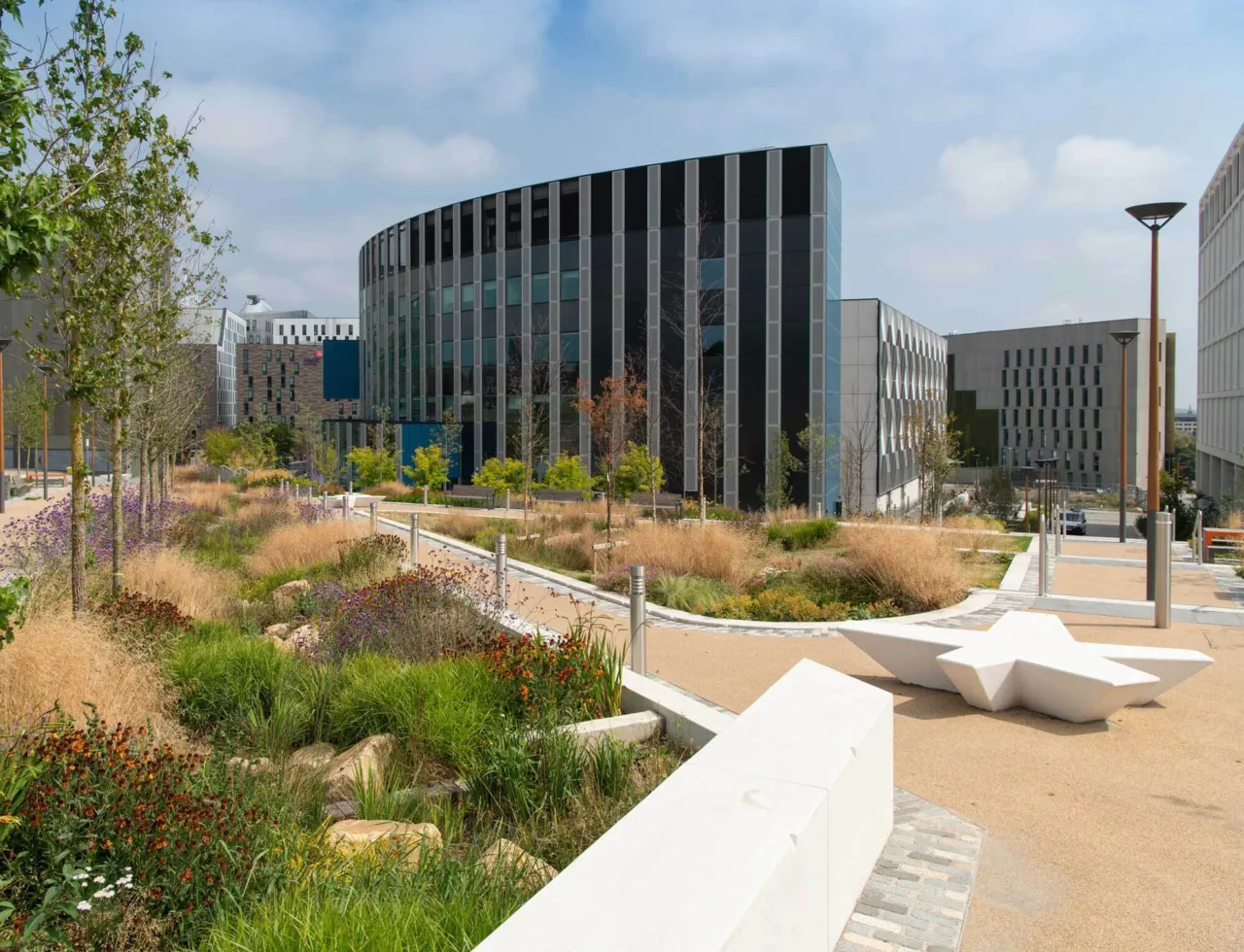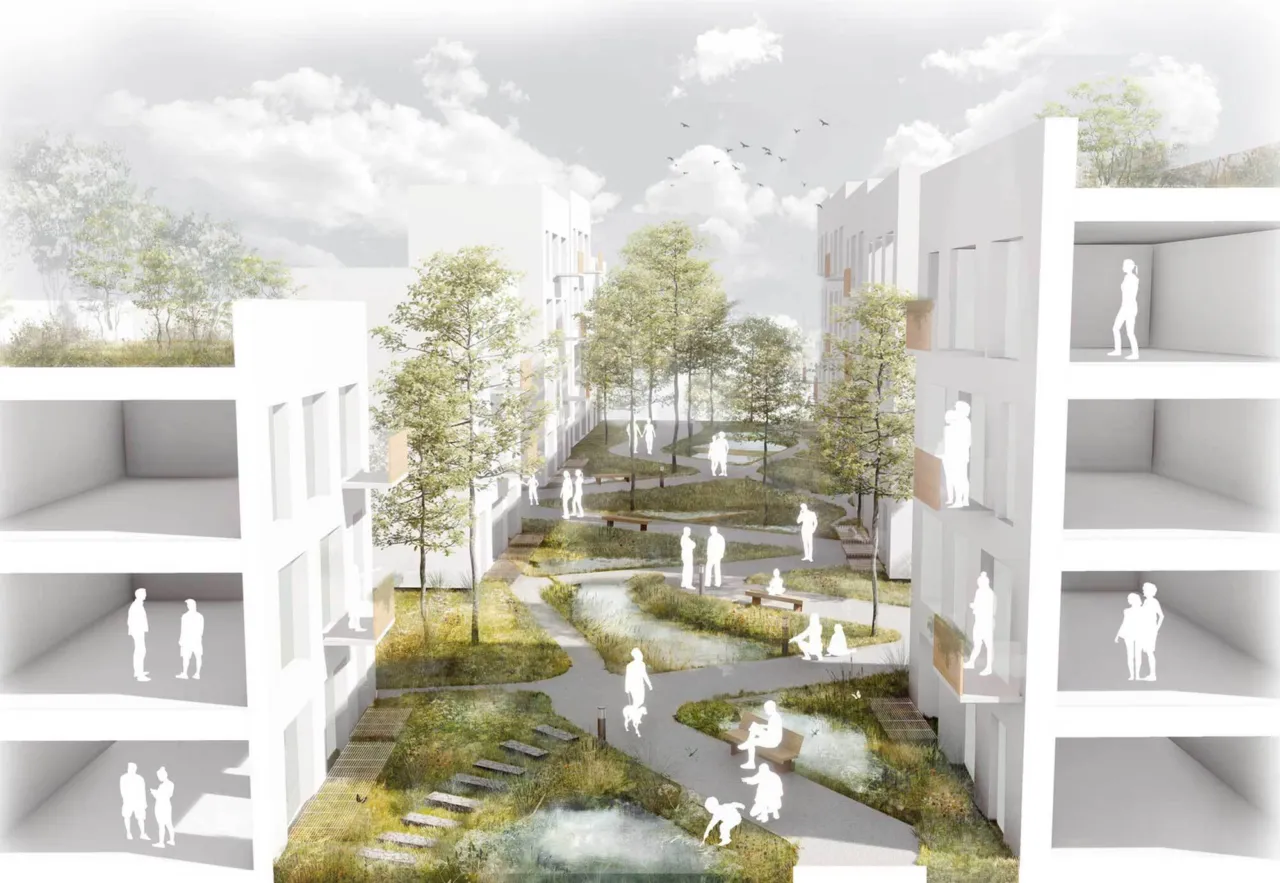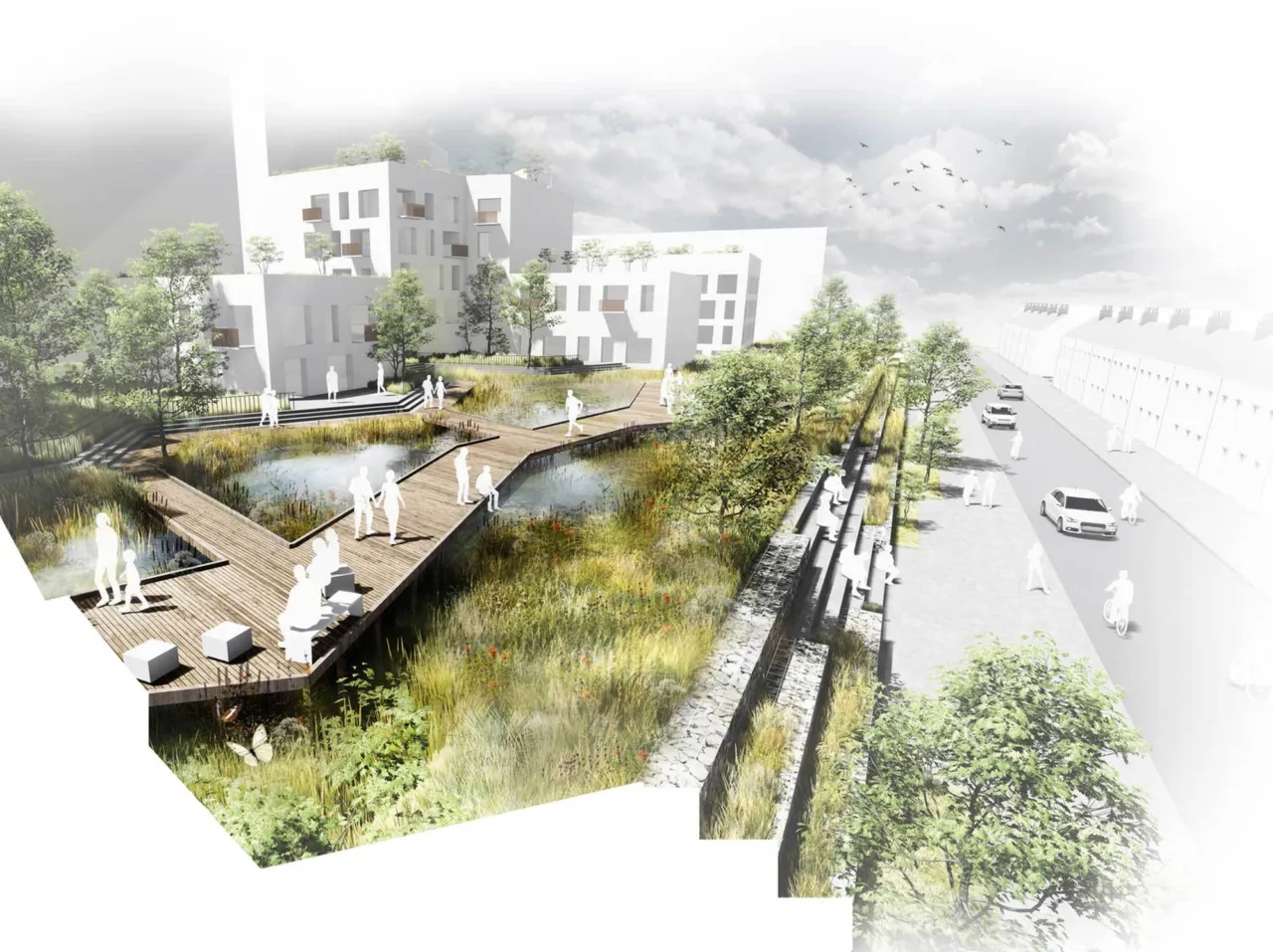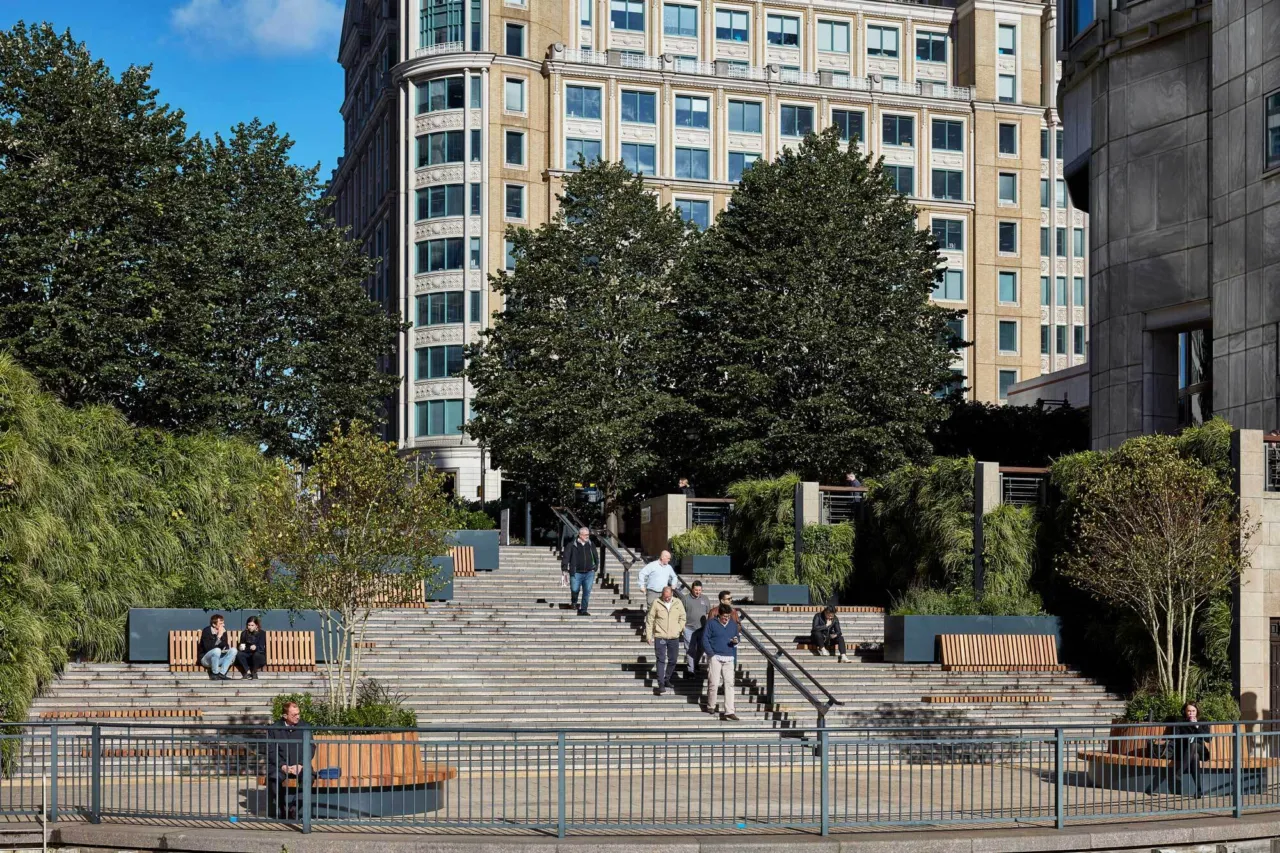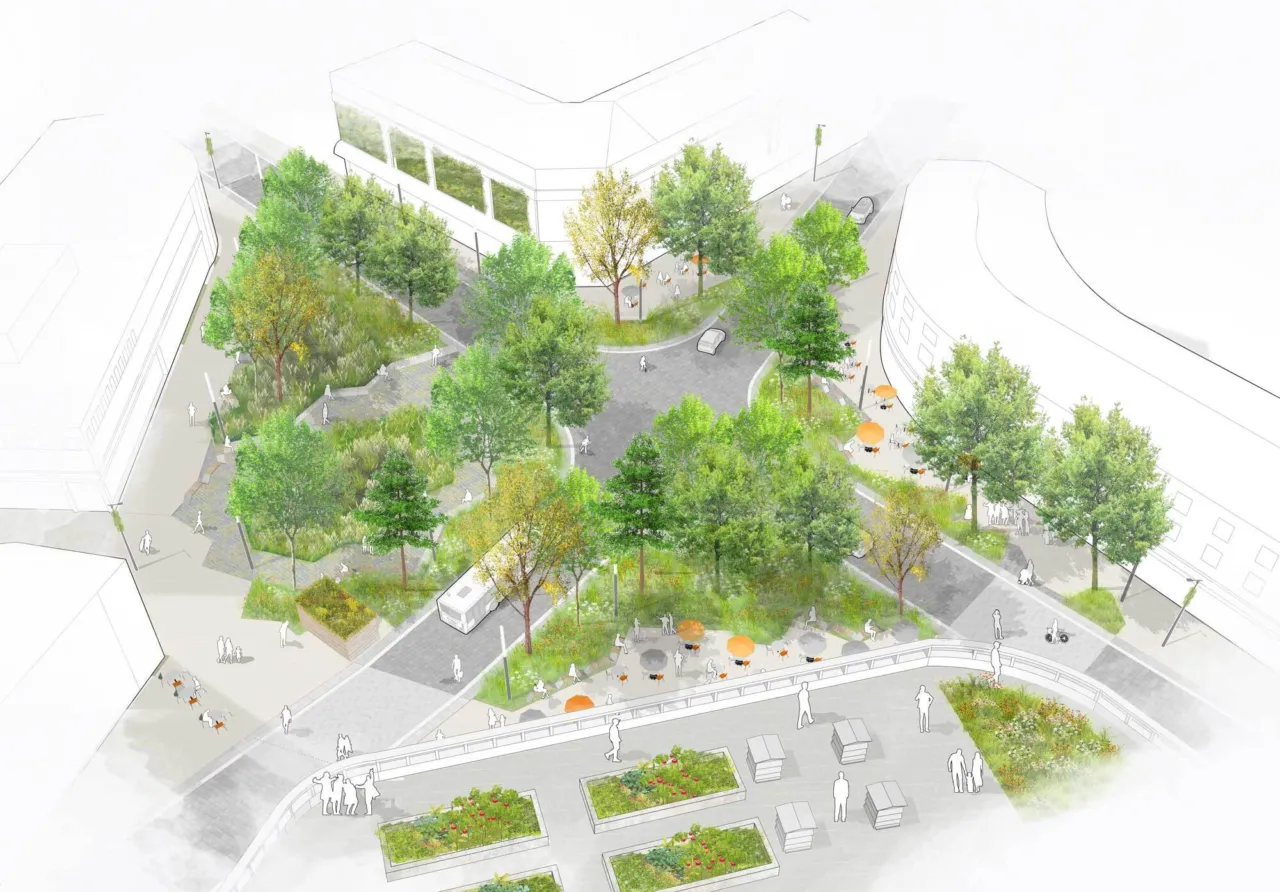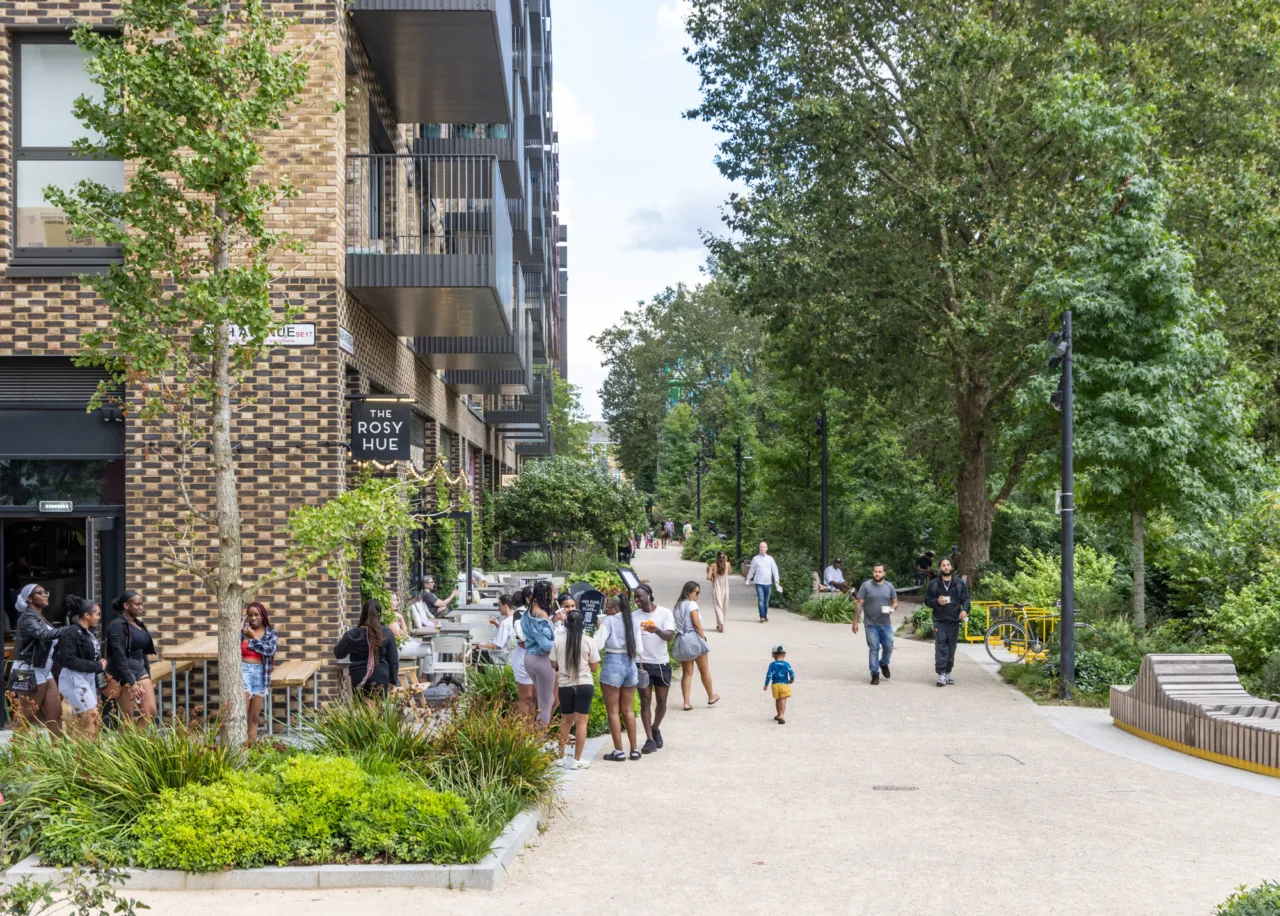
Greening our urban spaces is essential for creating vibrant, connected communities and today it must be at the forefront of quality placemaking. This thinking goes beyond simply enhancing nature for human enjoyment – it is a critical measure for reversing biodiversity loss and tackling climate change.
To protect and enhance our natural environment, a revolutionary shift in how we all design, organise and live within our cities must gain pace. This perspective focuses the vital importance of high-quality landscape and public realm in shaping liveable and sustainable cities and neighbourhoods. The solutions to these major issues should not be tokenistic or greening that simply looks pretty. They must contribute to a new regenerative urbanism that fundamentally prioritises nature-positive development, addressing the pressing crisis of climate change, public health and biodiversity loss with meaningful and lasting outcomes.
What is the need and desire for change?
Temperatures in cities are often several degrees higher than rural areas due to the urban heat island effect, where both the predominance of steel and concrete absorb and retain heat.
Green areas encourage physical activity which in turn promotes a greater sense of health and well-being. Nature-positive cities foster good public health, social connection and improved happiness.
England ranks among the most nature-depleted countries in the world, but the ambitious new biodiversity net gain legislation offers a positive opportunity to change the current narrative and ensure every development makes a positive contribution to biodiversity.
The tide is beginning to turn, but it’s a race against time. Discerning developers and local authorities alike have a greater understanding that innovative greening solutions can solve so many problems in one. We need to act now, we need to tread carefully and work towards being restorative; creating cities that regenerate themselves and create healthy beautiful places for communities to enjoy.