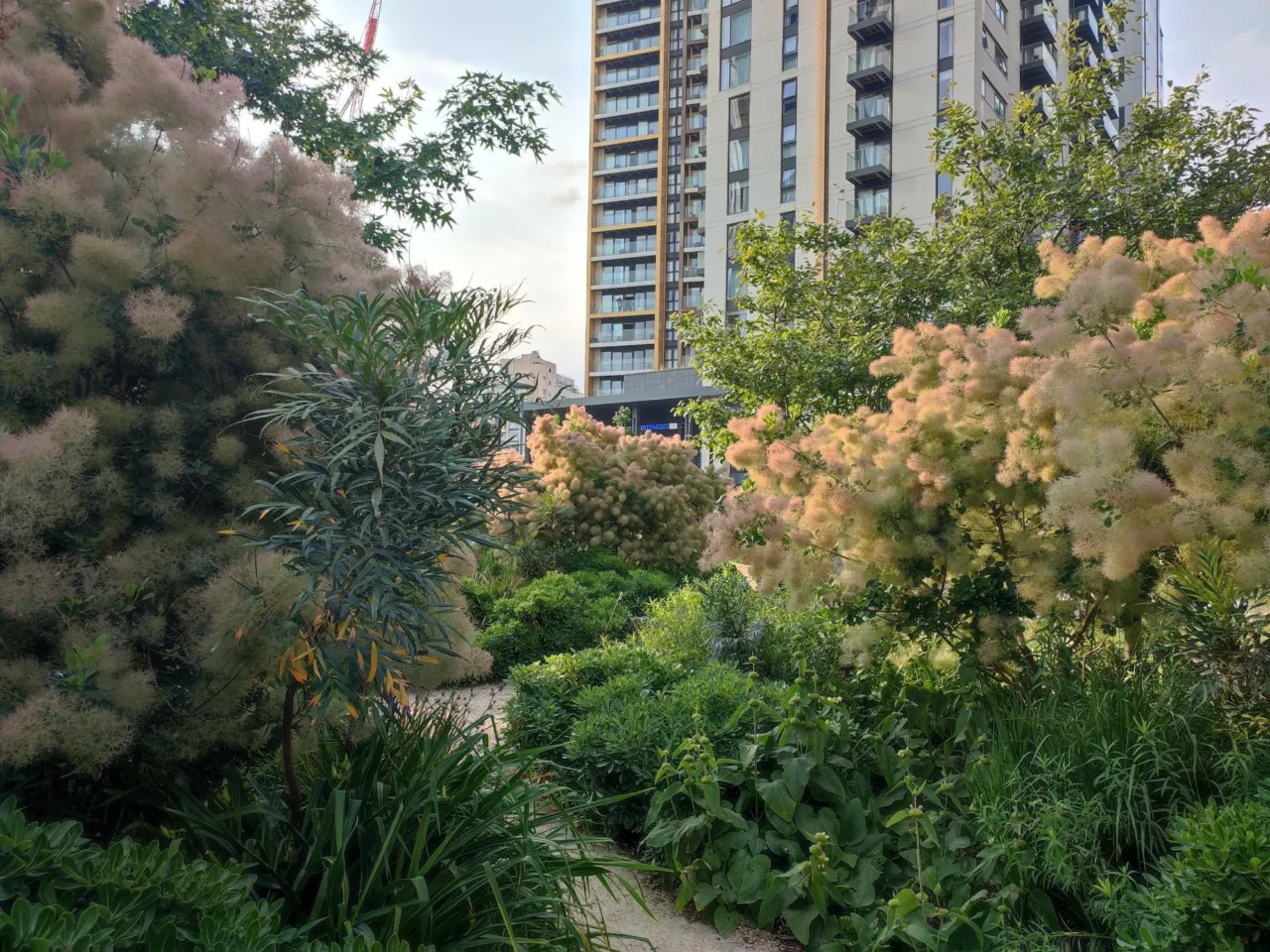
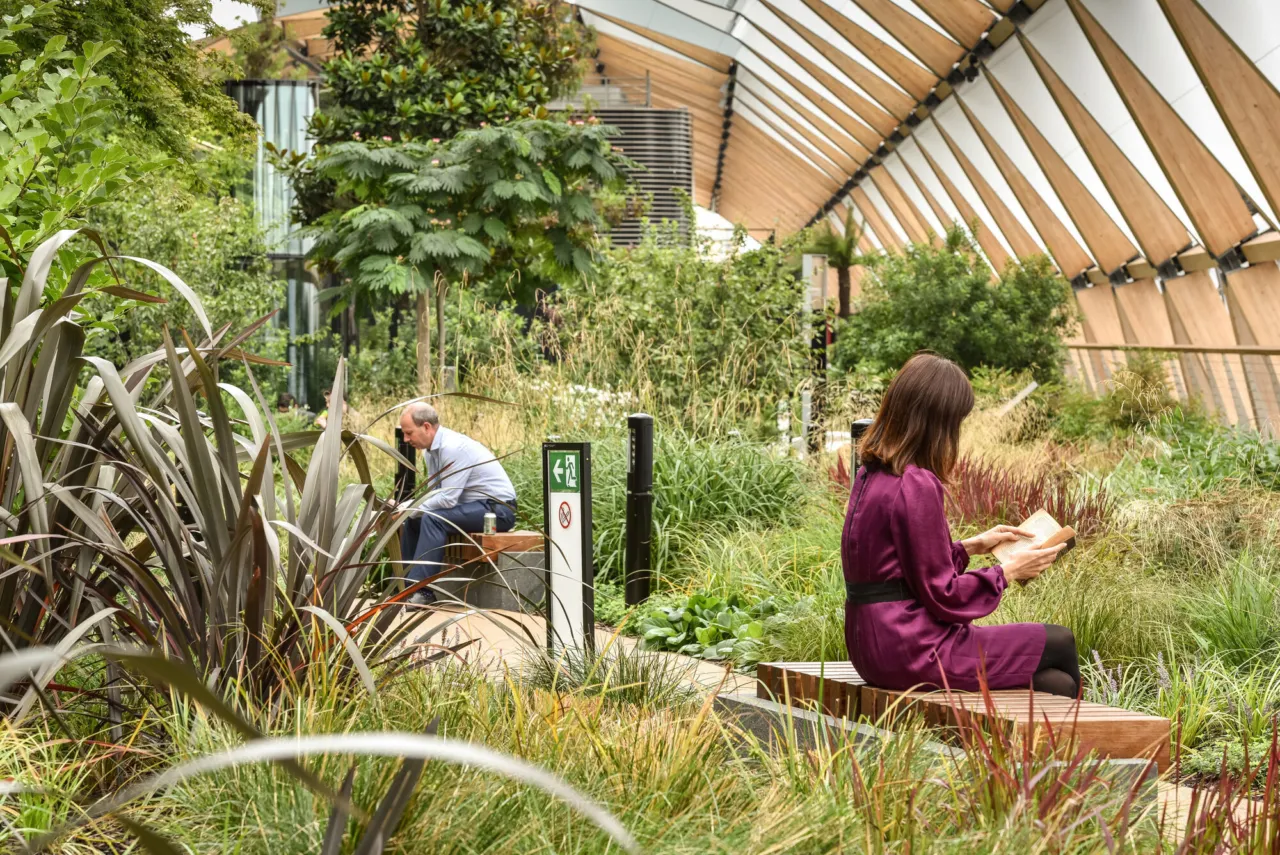
As the impact of climate change continues to intensify, alternating between droughts and heavy rainfall, it is imperative to know how to create and maintain resilient and long-lasting landscapes that can adapt and thrive during these extreme events, while also mitigating the impact on surrounding communities.
Our in-house planting team has dedicated many years to researching and planting test beds to understand the natural growth patterns and habitat preferences of various plants. This extensive research has taught us how to create biodiverse habitats that restore natural networks, enhance ecological connectivity, and effectively respond to extreme weather conditions. Additionally, our approach provides meaningful benefits to people by creating beautiful, uplifting spaces that enhance the environment and encourage local wildlife.
Below are a number of best practice recommendations on how to create and maintain successful and beautiful public realm planting, that can be applied to all scales of projects across the globe:
Engage early with the gardeners who will be constructing and maintaining your projects
Include in your brief and fee proposal an allowance for ongoing collaboration with gardeners to guide the planting process during the project and in the years following construction. Explain the benefits of this approach to your client. Leveraging the expertise of skilled gardeners in plant placement and long-term maintenance will ensure that the planting remains healthy and continues to thrive through routine care and adaption, achieving both aesthetic and sustainable outcomes. Implementing a long-term maintenance plan will create efficiencies in the whole life cycle of a scheme and help the planting reach its full potential and maximise habitats biodiversity value.
Conduct detailed studies for optimal plant selection
Ensure a meticulously detailed sun/shade and soil condition study is performed on your site at the outset of the project. This comprehensive study will precisely determine what plant communities can thrive where, giving you confidence in the suitability of the proposed species for your landscape.
Adopt a habitat-based planting approach for ecological and aesthetic benefits
Advocate for a habitat-based planting approach, a method that not only celebrates the uniqueness of each plant community but also brings significant ecological benefits. We can create resilient planting schemes that inspire and benefit your landscape by placing plants according to their natural growth patterns. Prioritise species with a broad ecological amplitude that are adaptable and can withstand non-optimal conditions in terms of light and soil moisture. Species with a very narrow ecological amplitude can quickly fail when the conditions are not ideal.